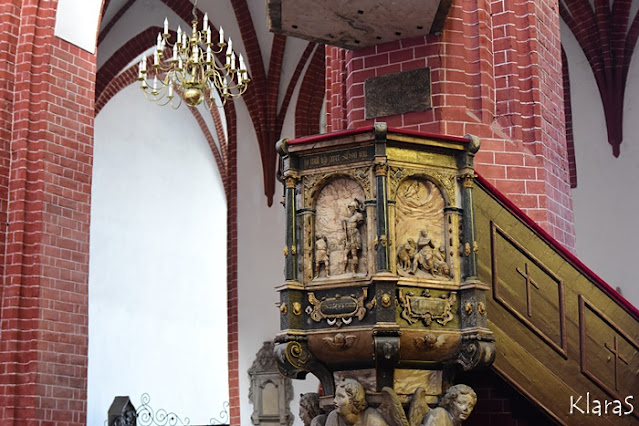
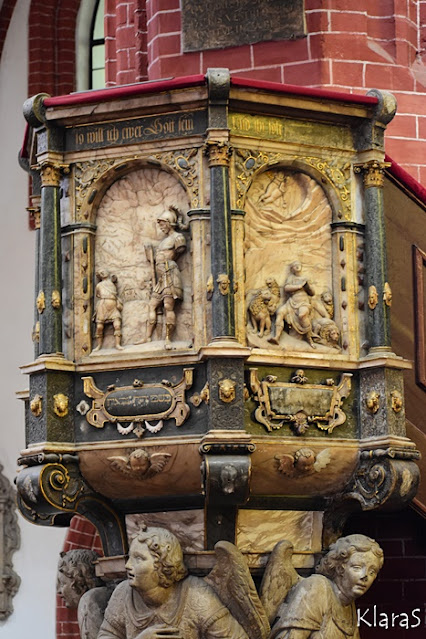
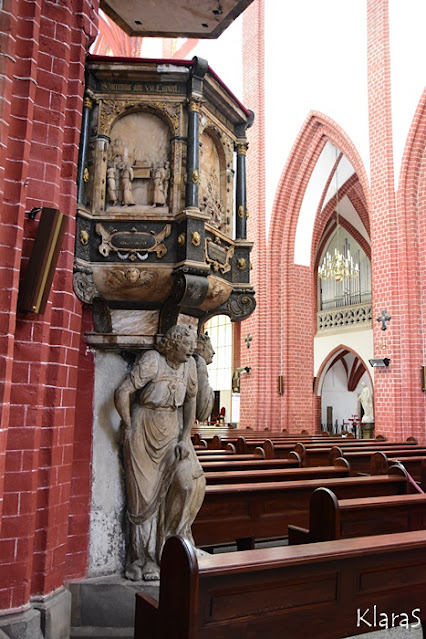
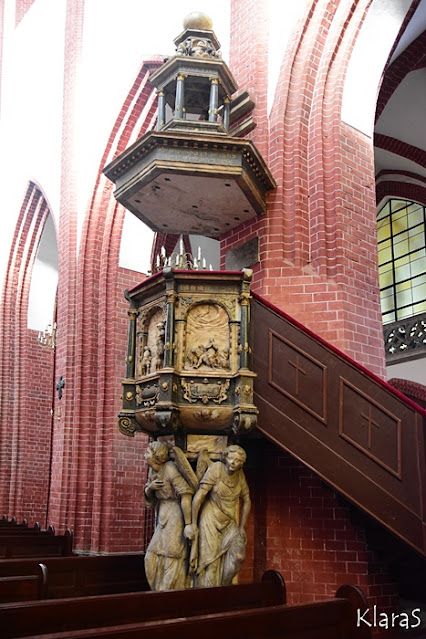
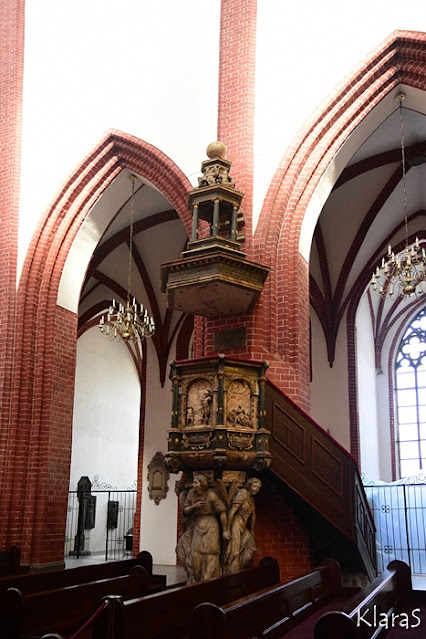
'Ambona w kościele św. Marii Magdaleny we Wrocławiu wykonana w latach 1579-1581 przez Friedricha Grossa.
Do konstrukcji tej wyjątkowej ambony Friedrich Gross zastosował całą paletę dostęnych wtedy materiałów, które uczyniły ambonę kolorową - a więc modną wedle óczesncyh kryteriów. I tak, podstawę oraz elementy konstrukcyjne wykonano tradycyjnie z piaskowca. Kolumienki kosza powstały z zielonego marmuru, płaskorzeźby z alabastru z podlwowskich kamieniołomów, a tła inskrypcji ze ślężańskiego gabro.
Do tak skomplikowanego dzieła zatrudnieni zostali liczni pomocnicy: Bartholomeus Fichtenberger - malarz, Stefan Gotz - ludwisarz oraz Christoph Weirach - ślusarz. Stefan Gotz wykonał poękne drzwiczki mosiężne umieszczone w bramce. Dzięki znanym rachunkom można obliczyć koszt wykonania całej ambony: ok. 500 talarów. Spora to była suma na owe czasy, porównywalna z wykonaniem kilku drewnianych ambon podobnej wielkości.
Nie moglibyśmy jednak docenić w pełni kunsztu Friedricha Grossa Starszego, gdyby nie specyficzne tematy ambonowych przedstawień, w których artsta ten mógł się wykazać. Wszytskie releify korpusowe realizują melanchtońską dewizę 'Verbum Domine Manet in Aeternum' ('Słowo Pańskie pozostanie na Wieczność').
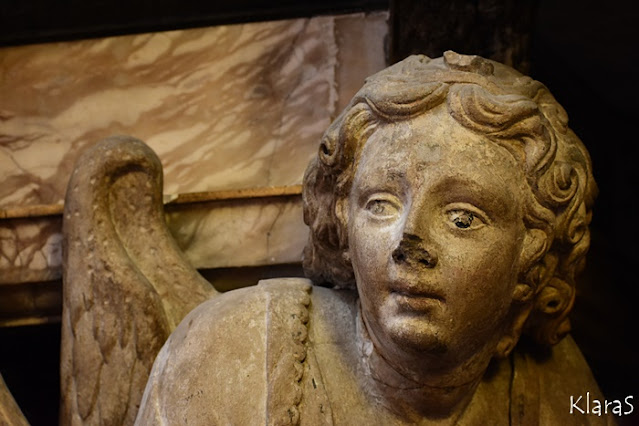
Ideę tę uosabia 'Eliasz zsyłający ogień na oddziały Ochozjasza' - Słowo Pańskie jest niezawodną bronią o niszczycielskiej sile. W tę samą wymowę wpisuje się relief 'Zburzenie Murów Jerycha'. Odmienny jest natomiast wydźwięk pozostałych dwóch scen: 'Dawida i Goliata' oraz 'Daniela w lwiej jamie'. W tych przypadkach Słowo Pańskie jest nadzieją, która może uratować z opresji. Bardzo ciekawym i rzadko spotykanym przdstawieniem pozostaje również umieszczony pod schodami smok, metafora grzechu. Wchodząc na ambonę kapłan przechodził nad nim, symbolicznie go depcząc. Kosz ambony wspiera się na trzech aniołach - boskich pomocnikach, którzy 'unoszą w górę' kaznodzieję podczas głoszenia Słowa Pańskiego. Na Śląsku to rozwiązanie tak się spodobało, że na wrocłąwskiej podporze były wzorowane inne. Czasem też podporę dla kaznodziei stanowił Mojżesz, Habakuk, św. Andrzej lub św. Krzysztof. Obeznany w świecie pastor kościoła św. Marii Magdaleny, Lucas Polio wyposażył ambonę w inskrypcje w pięciu różnych językach: łącińskim, greckim, aramejskim, hebrajskim i niemieckim. Pod tym względem to chyba jedyne tak 'międzynarodowe' dzieło w Europie Środkowej.'
Źródło: tablica informacyjna w kościele.
--------
'Pulpit in the church of St. Mary Magdalene in Wrocław made in the years 1579-1581 by Friedrich Gross.
For the construction of this unique pulpit, Friedrich Gross used a whole range of materials available at that time, which made the pulpit colorful - and therefore fashionable according to contemporary criteria. And so, the base and construction elements are traditionally made of sandstone. The pillars of the basket were made of green marble, alabaster reliefs from quarries near Lviv, and the background of the inscriptions from the Silesian gabbro.
Numerous helpers were employed for such a complicated work: Bartholomeus Fichtenberger - painter, Stefan Gotz - bell founder and Christoph Weirach - locksmith. Stefan Gotz made a nice brass door placed in the gate. Thanks to the known bills, it is possible to calculate the cost of the entire pulpit: approx. 500 thalers. It was quite a sum for those times, comparable to making a few wooden pulpits of similar size.
However, we would not be able to fully appreciate the artistry of Friedrich Gross the Elder, if not for the specific themes of the pulpit performances in which the artist could prove himself. All corpus releases follow the melanchton's motto 'Verbum Domine Manet in Aeternum' ('The Word of the Lord will remain for Eternity').
This idea is personified by 'Elijah Sending Fire on the troops of Ahaziah' - the Word of the Lord is a reliable weapon with destructive power. The relief 'The Destruction of the Walls of Jericho' appears in the same meaning. However, the overtones of the other two scenes are different: 'David and Goliath' and 'Daniel in the lions' den'. In these cases, the Word of the Lord is a hope that can save from oppression. A very interesting and rare representation is also the dragon placed under the stairs, a metaphor of sin. On entering the pulpit, the priest stepped over it, symbolically trampling on it. The basket of the pulpit is supported by three angels - divine helpers who 'lift up' the preacher during the proclamation of the Word of the Lord. Silesia liked this solution so much that others were modeled on the Wroclaw support. Sometimes the preacher was also supported by Moses, Habakkuk, and St. Andrew or St. Christopher. The world-famous pastor of the Church of St. Mary Magdalene, Lucas Polio equipped the pulpit with inscriptions in five different languages: Latin, Greek, Aramaic, Hebrew and German. In this respect, it is probably the only such 'international' work in Central Europe.'
Source: information table in the church.









 "
border-radius: 100%;
border-image-source: initial;
border-image-slice: initial;
border-image-width: initial;
border-image-outset: initial;
border-image-repeat: initial;
border-width: 1px;
border-style: solid;
border-color: rgb(235, 235, 235);
margin:0;
padding: 5px;
/" />
"
border-radius: 100%;
border-image-source: initial;
border-image-slice: initial;
border-image-width: initial;
border-image-outset: initial;
border-image-repeat: initial;
border-width: 1px;
border-style: solid;
border-color: rgb(235, 235, 235);
margin:0;
padding: 5px;
/" />


 Posts
Posts



