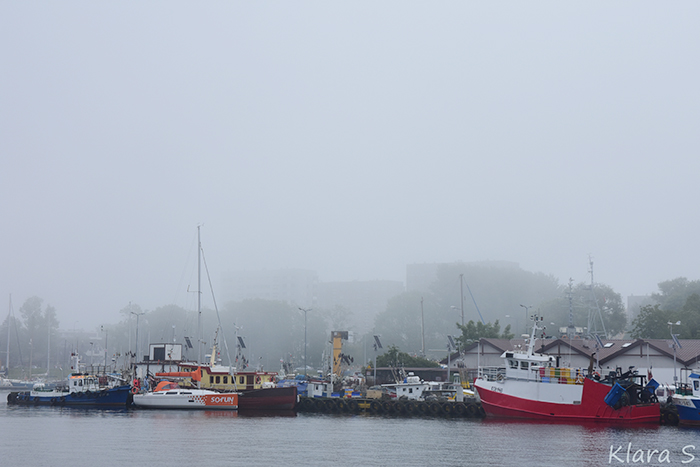
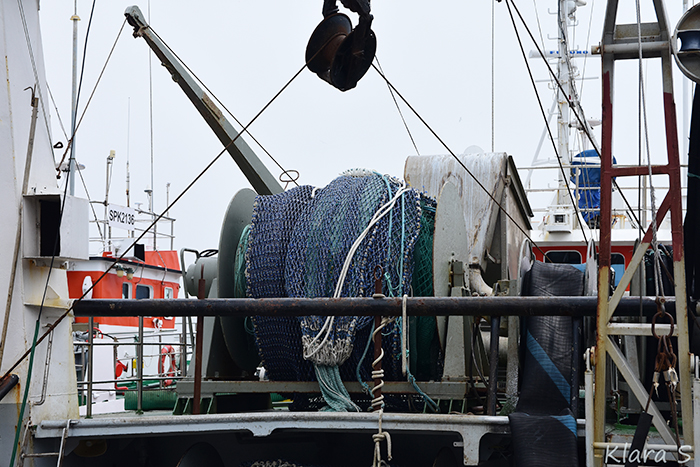
On Friday we had a massive fog. I took some photos of the fishermen's harbour.
----------
W piątek mieliśmy ogromną mgłę. Zroniłąm kilka zdjęć w porcie rybackim.
Linked to:
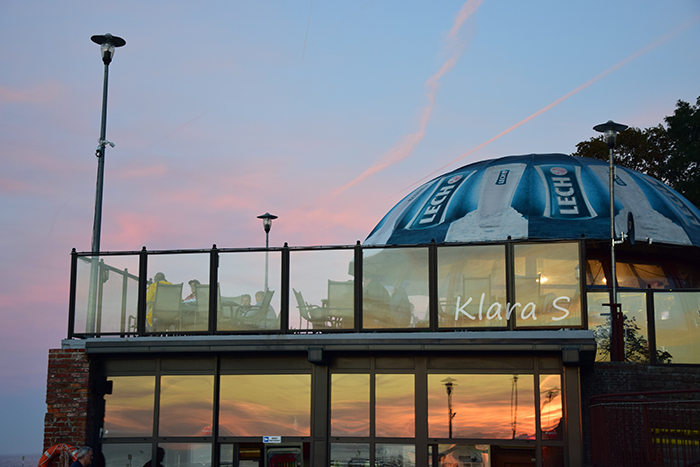
In the Jedności Narodowej Park, I photographed the observation dome and the bunker on the beach. Both structures are from World War II, or so I think.
----------
W Parku im. Jedności Narodowej sfotografowałam kopułę obserwacyjną, a na plaży bunkier. Obie struktury są z czasów II wojny światowej, a przynajmniej tak mi się wydaje.
Linked to:
Marcin Dunin was the Primate of Poland in the years 1831 - 1942. From October 6, 1839 to August 5, 1840, the Prussian king imprisoned him in the Kołobrzeg fortress because of a dispute over mixed marriages (Catholic - Protestant).
----------
Marcin Dunin był prymasem Polski w latach 1831 - 1942. W dniach od 6 października 1839 do 5 sierpnia 1840 król pruski więził go w kołobrzeskiej twierdzy z powodu sporu o małżeństwa mieszane (katolicko - protestanckie).
Linked to:
'Stone Rampart was built during the last modernisation of Fortress Kolobrzeg in 1832 - 1936. Together with the Wolf Fort (currently the amphitheatre), it was the furthest eastern ground of the defence line blocking off access to the port. It could also fight vessels approaching the port. The German name Waldenfelsschanze commemorates Captain Karl W.E. Waldenfels, who was killed in action in the nearby Wold Fort in 1807. The rampart consisted of an earthwork with a stone wall, hence Polish name Stone Rampart. Upon the liquidation of the fortress in 1887 the former rampart was turned into a restaurant and it was here that patients of Kolobrzeg Spa came for walks. Inside the rampart, there was a garden restaurant while on a high wall on the seaside a cafe on a glass veranda. All that was destroyed during the fights in 1945.'
Illustrations
a - Fortifications on furthest eastern ground built in 1832 - 1836: Stone Rampart and converted Wolf Fort in 1807 (a detail from an old map).
b - Stone Rampart in the 1930's - a bird's eye view. Converted into a restaurant.'
----------
'Kamienny Szaniec powstał w czasie ostatniej modernizacji twierdzy kołobrzeskiej w latach 1832 - 1936. Wraz z Fortem Wilczym (obecnie amfiteatr) stanowił wysuniętą wschodnią rubież obrony blokującą dostęp do portu. Mógł też zwlaczać okręty zbliżające się do portu. Niemiecka nazwa "Waldenfelsschanze" upamiętniająca kpt. Karola W.E. Waldenfelsa, który w 1807 poległ w pobliskim Forcie Wilczym. Szaniec składał się z wału ziemnego z kazamatami i fosy. Wejście było od strony zachodniej. Od strony morza obiekt zabezpieczony był wałem z głazów, stąd polska nazwa Kamienny Szaniec. P likwidacji tewierdzy, od 1887 roku dawny szaniec pełnił funkcję rekreacyjno - gastronomiczną i byłcelem spacerów kuracjuszy kołobrzeskiego uzdrowiska. Wewnątrz szańca zbudowano restaurację. W czasie walk w marcu 1945 r. wszystko zostało zniszczone.
Ilustracje
a - Fortyfikacje na wschodniej rubieży nadmorskiej zbudowane w latach 1832 - 1836:
Kamienny Szaniec i przebudowany Fort Wilczy z 1807 r. (fragment starej mapy).
b - Widok Kamiennego Szańca z lotu ptaka w latach 30 - tych XX w. Obiekt zaadaptowany do celów gastronomiczno - rekreacyjnych.'
Linked to:
Finally, we have a few hours of the sun and clear sky.
Linked to:
Wooden sculptures at the yard of the Górnik Hotel. March 2018.
----------
Drewniane rzeźby w ogrodzie hotelu Górnik. Marzec 2018 roku.
Linked to:








 "
border-radius: 100%;
border-image-source: initial;
border-image-slice: initial;
border-image-width: initial;
border-image-outset: initial;
border-image-repeat: initial;
border-width: 1px;
border-style: solid;
border-color: rgb(235, 235, 235);
margin:0;
padding: 5px;
/" />
"
border-radius: 100%;
border-image-source: initial;
border-image-slice: initial;
border-image-width: initial;
border-image-outset: initial;
border-image-repeat: initial;
border-width: 1px;
border-style: solid;
border-color: rgb(235, 235, 235);
margin:0;
padding: 5px;
/" />
 Posts
Posts



